


Plan track lighting in a dining room with practical layouts for long and round tables, 2700K vs 3000K guidance, sideboard accents, beam-angle tips, and ENCORE fixture links.
Track lighting gives a dining room control over where the eye goes. Aim the beams at the table for dinner, soften the surrounding walls, and add a separate layer for a sideboard or drinks cabinet. The right layout depends on table shape, ceiling height, and how the room is used after the meal.
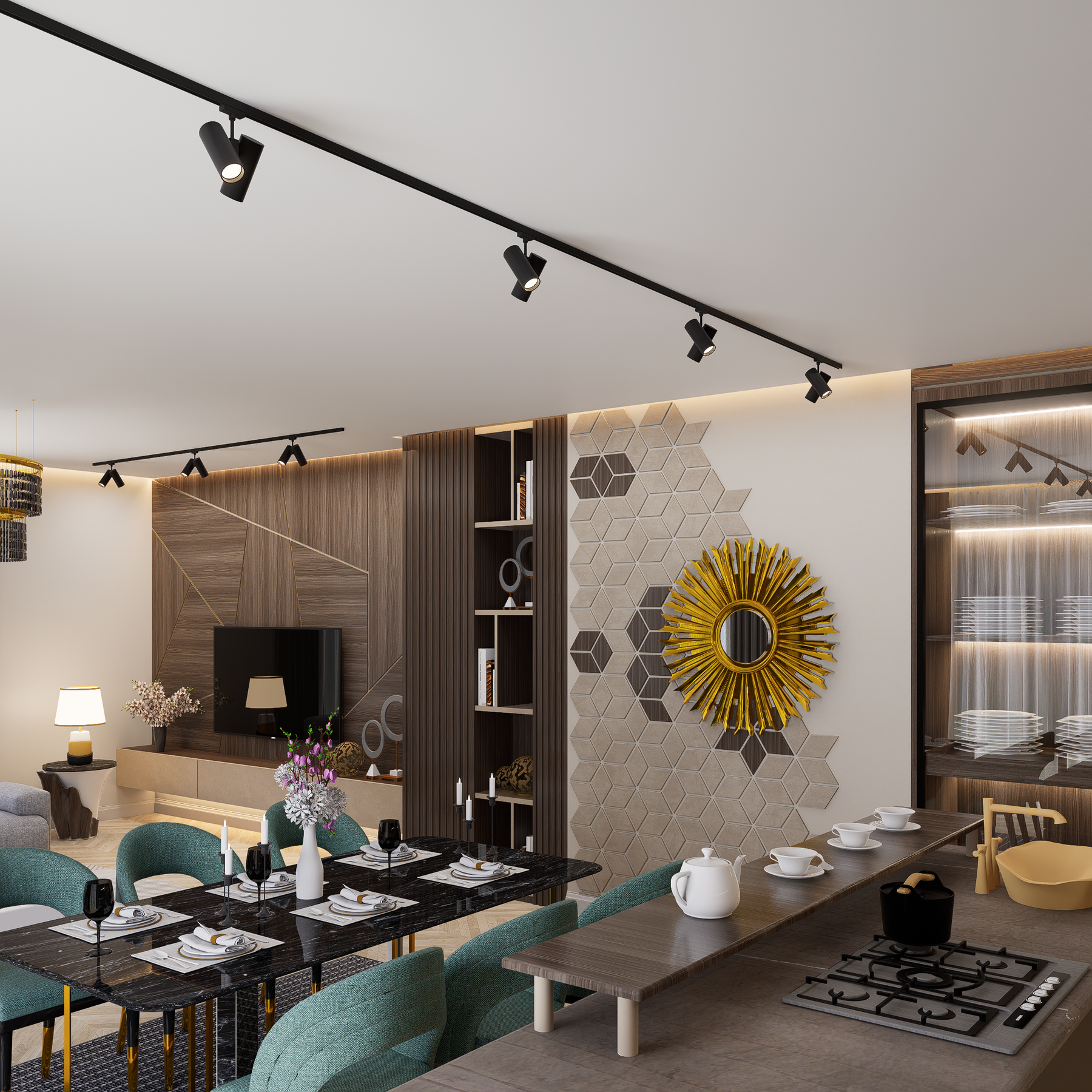
This guide shares practical dining room track lighting ideas for long and round tables, warm-white color temperatures, accent lighting, and fixture selection. Treat each layout as a starting point, then confirm spacing and output against your own room dimensions.
1. Start with the table, not the ceiling
The table is the visual center of the dining room. Build the lighting layout around its footprint, then account for chairs, circulation paths, artwork, and nearby cabinetry. Guests should see food and faces clearly without looking straight into a bright source.
- Define the dining zone. Keep the strongest beams on the tabletop rather than spilling into walkways.
- Use layers. Table lighting gives focus; softer wall or cabinet lighting keeps the room from feeling like a bright island in a dark space.
- Plan for dimming. Dinner, cleaning, and homework each need different light levels.
2. Track lighting layouts for long and round tables
Rectangular table: run the track parallel to the long edge. Place adjustable heads along the rail and aim them across the table, overlapping the light pools so the ends do not fall into shadow. For a very long or wide table, two parallel runs may provide more even coverage than one crowded row.
Round table: use a short centered track or a compact cross-shaped layout if the system supports it. Aim several heads inward from different positions instead of directing every beam at the exact center. This spreads light across place settings and reduces contrast between the middle and edge.
How many track heads do you need?
There is no reliable one-number rule for every room. Head count depends on lumen output, beam angle, mounting height, table width, and ambient light. Map the beam footprints on the tabletop. Narrow beams create brighter pools and stronger contrast; wider beams overlap more gently. Avoid aiming a visible source into seated guests’ eyes.
For flexible aiming, explore the ENCORE OVEGA zoomable LED track light. Its adjustable-beam concept can help when you need tighter focus or broader coverage as furniture arrangements change. Confirm the selected version’s beam range and dimming compatibility before specifying it.
3. Choose 2700K or 3000K for the dining mood
Both 2700K and 3000K are warm white. 2700K tends to read more amber and intimate; 3000K usually feels a little cleaner and more neutral. Finishes, daylight, dimming level, and LED color quality all affect the final impression.
- Choose 2700K for intimate dinners, wood-heavy interiors, and a softer evening atmosphere.
- Choose 3000K for a warm look with slightly clearer definition for food, tableware, and mixed-use dining spaces.
- Keep adjoining rooms in mind. In an open-plan kitchen and dining area, coordinate color temperature or create separate dimming scenes.
Color temperature is only one part of the result. A high color-rendering index helps food, timber, fabrics, and skin tones look more natural. CRI 90+ is a useful target when available; compare the actual product data and budget.
4. Light the sideboard, shelves, and drinks cabinet
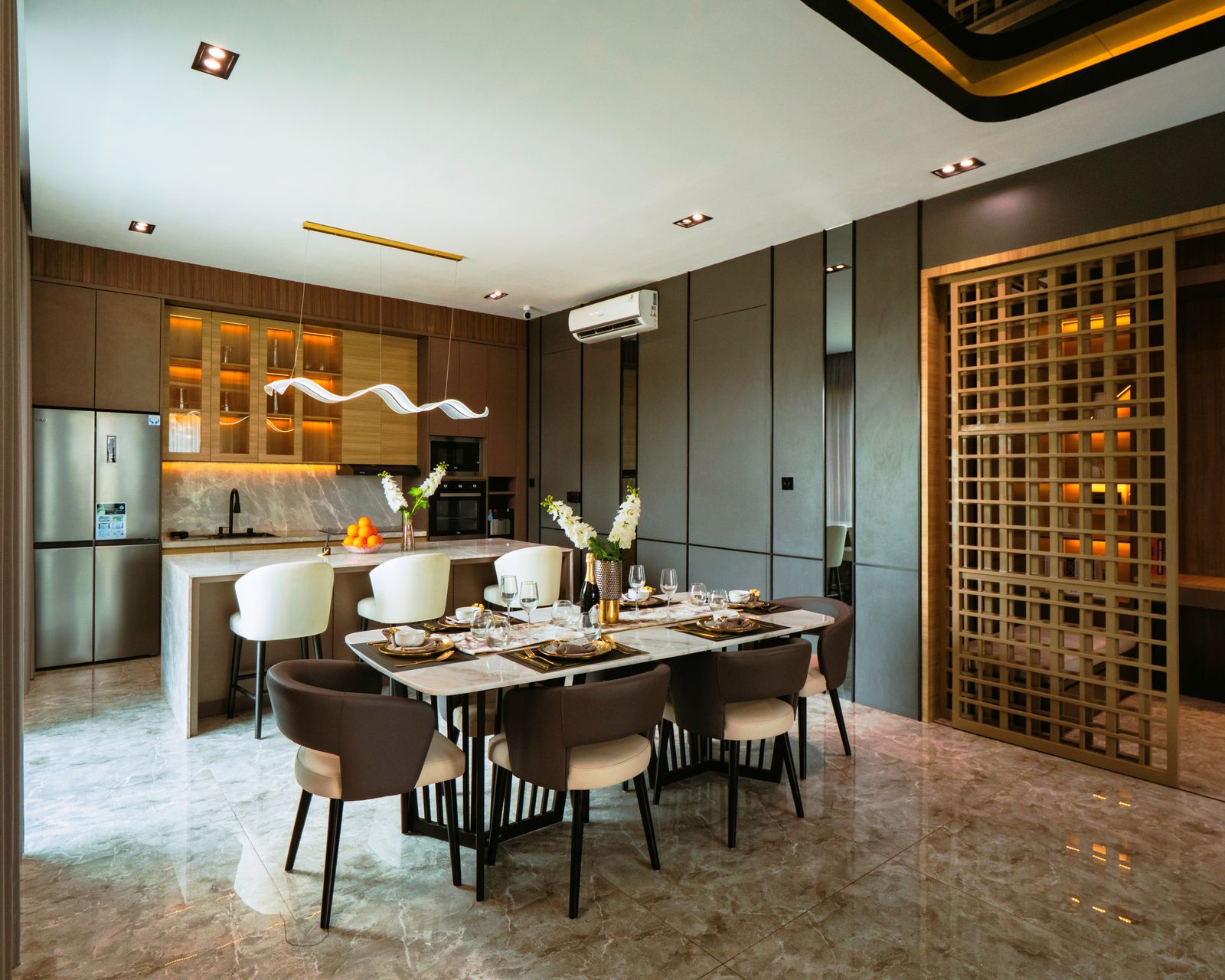
A sideboard or drinks cabinet can anchor the room after the table lights are dimmed. Aim one or two heads at the cabinet top, artwork, or open shelves. For glassware behind glass, test the aiming angle to avoid reflections.
- Use a moderate beam spread for a sideboard top and a narrower beam for one artwork or sculptural object.
- Keep accent lights out of seated guests’ eye lines.
- Put table and cabinet lighting on separate dimming controls when possible.
For controlled accent lighting, see the ENCORE MEGA LED track light. Match optics and output to the cabinet size rather than choosing wattage alone.
For connected spaces, read our guides to track lighting for kitchens and track lighting in living rooms. Consistent lighting logic helps an open-plan space feel considered.
5. Select the track system and beam angle
Choose the system around the ceiling and the flexibility you need. Surface-mounted track can suit finished ceilings and renovations; recessed systems create a quieter ceiling line when planned early. Confirm track length, feed position, circuit requirements, and dimmer compatibility before installation.
Beam angle affects coverage and glare. A narrow beam can highlight artwork but create isolated bright spots on a broad tabletop. A wider beam usually makes a more even dining surface, provided the fixture has enough output at the mounting height. Aim across the table rather than from positions where the source is visible to seated guests.
For homes where layouts may change, adjustable heads let you redirect light when the table moves or the room becomes a work or entertaining space. Browse the ENCORE track lighting range, then check each product page for exact electrical and optical specifications.
6. Common mistakes to avoid
- One bright beam in the middle. Distribute light along the full length of a long table.
- Too much contrast. Add gentle wall or cabinet light if the table is a bright island in a dark room.
- Visible glare. Check from seated eye height, not just from the doorway.
- Ignoring the dimmer. Confirm compatibility between driver, fixture, and control.
- Mixing color temperatures by accident. Coordinate adjacent zones or separate them intentionally.
- Choosing by watts alone. Compare delivered lumens, beam angle, CRI, glare control, and dimming performance.
7. A simple planning checklist
- Measure the table and mark its position on the ceiling plan.
- Choose a rail direction that follows the long axis or supports inward aiming for a round table.
- Estimate beam overlap at the actual mounting height.
- Select 2700K or 3000K based on the mood and adjoining rooms.
- Add accent lighting for cabinetry, shelving, or artwork.
- Verify electrical compatibility, mounting, dimming, and local code requirements with a qualified installer.
Frequently asked questions
Is track lighting good for a dining room?
Yes. Adjustable heads can direct light onto the table and nearby features. Good results depend on beam placement, glare control, and suitable dimming.
How far above the table should track lights be?
There is no single height for every ceiling and fixture. Ceiling height, beam angle, fixture construction, and seated sightlines affect the result. Follow the manufacturer's installation instructions and test aiming in the room.
Is 2700K or 3000K better for dining?
2700K creates a warmer, more intimate feel. 3000K is still warm but often reads a little cleaner. Compare samples against your table finish, wall color, and dinnerware before deciding.
Can track lighting highlight a buffet or bar?
Yes. Use separate heads aimed at the cabinet surface, shelves, or artwork, and dim them independently from the table lights when possible.
Final thought
The best track lighting in a dining room follows the way people use the table. Start with even, comfortable light on the place settings. Add a softer layer for the room and a focused accent for the sideboard. Use aiming and dimming to shift from everyday meals to a quieter evening scene.