


Are motorized spotlights worth it at home? Learn how app-controlled aiming works, where it helps, what to check, and how ENCORE MOVIA fits.
A spotlight is useful because it puts light where it matters. A motorized spotlight takes that idea one step further: instead of climbing a ladder or manually repositioning a fitting, you can adjust the direction from a compatible control system. But does that make sense in an ordinary home—or is it technology looking for a problem?
The honest answer depends on your room, your habits, and the lighting system you choose. This guide explains what motorized spotlights do, where they earn their place, what app control can and cannot do, and what to check before upgrading.

What are motorized spotlights?
Motorized spotlights are directional lights with a powered aiming mechanism. Depending on the model, the head can pan horizontally, tilt vertically, or adjust its beam angle. A compatible control system lets you change these settings without reaching the fixture.
That is different from a standard adjustable spotlight. A conventional track light is aimed by hand and stays there until someone moves it. A motorized model adds remote positioning, which is especially useful when the target changes often or the fixture is mounted high above the floor.
People searching for a motorized spotlight for home may be imagining a light that follows them around automatically. In practice, most systems are better understood as remotely aimable fixtures: you choose a direction or preset, and the light moves to that position. Automatic tracking requires additional sensors or software and should not be assumed.
When does auto-aiming make a difference at home?
1. Art, collectibles, and display shelves
If you rotate artwork, restyle a shelf, or move objects in a display cabinet, a fixed beam can quickly become misaligned. Motorized aiming makes it easier to bring the highlight back onto the subject. For valuable objects, also check the fixture's heat management, UV characteristics where relevant, and the light level recommended for the material.
2. Living rooms that do more than one job
A living room may be used for reading, entertaining, watching a film, and displaying art. The useful light direction changes with the activity. A motorized spotlight can redirect accent light towards a wall, a feature object, or a reading corner without manually adjusting the fitting each time.
3. High ceilings and hard-to-reach fixtures
This is one of the clearest practical benefits. If a spotlight is installed over a stairwell, a double-height living room, or a tall display, manual adjustment can require a ladder or specialist access. Remote aiming can reduce that inconvenience—provided the system is commissioned properly and the fixture remains accessible for maintenance.
4. Flexible rooms and evolving interiors
Furniture layouts change. A home office becomes a guest room; a dining area becomes a work surface. Motorized lights are most valuable when the lighting target changes frequently. If your layout and focal points rarely change, a well-positioned fixed or manually adjustable spotlight may be the simpler choice.
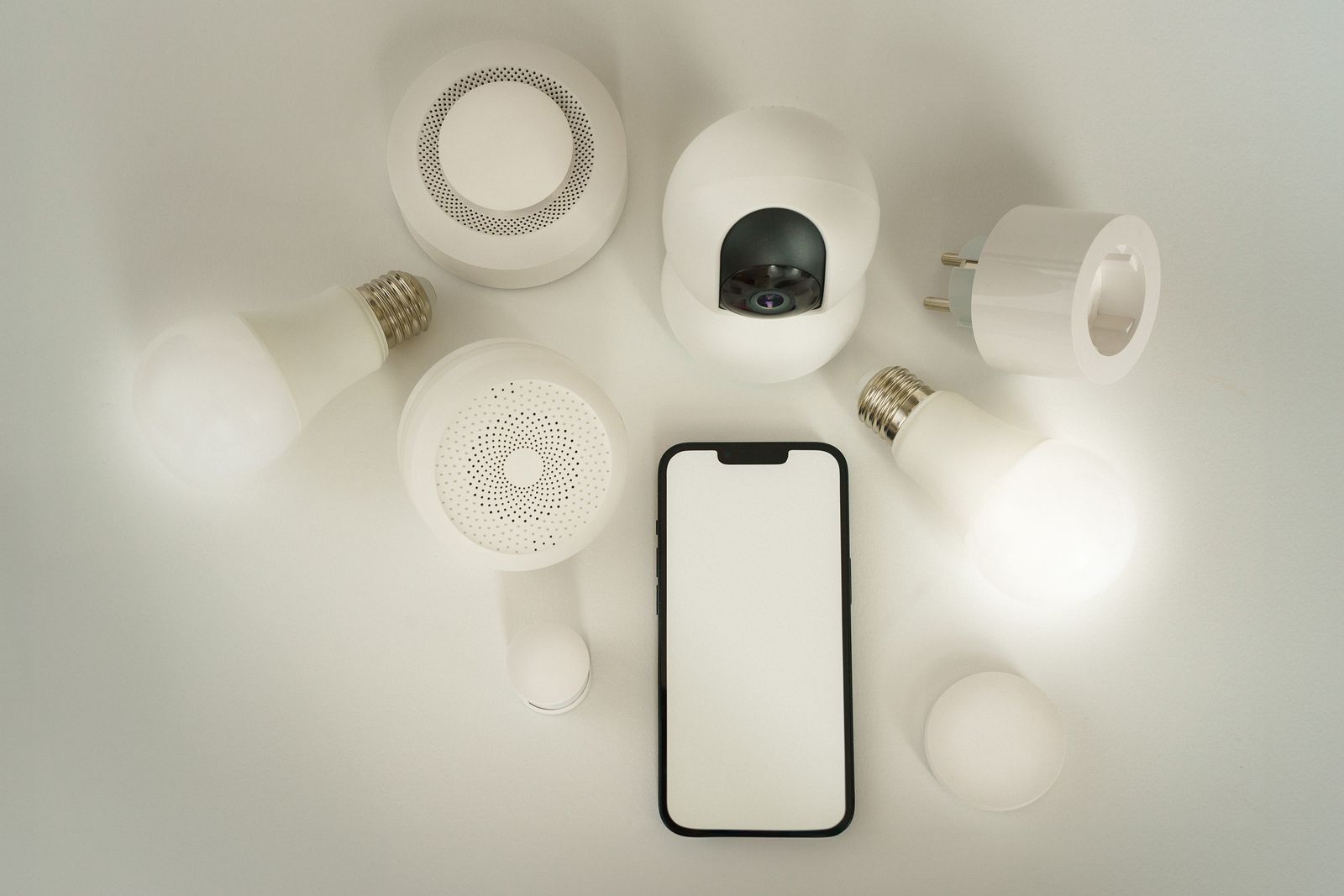
What does app-controlled spotlight actually mean?
The phrase app controlled spotlight can describe several different levels of control. Before buying, separate them instead of assuming every smart spotlight offers every feature.
- On/off and dimming: switch the light and adjust brightness.
- Colour temperature: change between supported warm and cool white settings, if the model has tunable white capability.
- Motor positioning: pan or tilt the light remotely, when the fixture and control system support it.
- Scenes and schedules: recall saved settings or run time-based changes, if supported by the controller and app.
- Automatic tracking: follow a moving person or object. This is a separate capability and is not a standard feature of motorized track lights.
One important detail: an app may control brightness and colour temperature without controlling the motor. Likewise, a motorized fixture may offer remote aiming but not native Wi-Fi or voice-assistant support. Confirm the exact compatibility list before planning your room around a feature.
Before and after: what changes when a spotlight can move?
Imagine a wall-mounted artwork being replaced by a tall plant. With a conventional adjustable spotlight, someone needs to physically re-aim the head. With a motorized model, a compatible controller can reposition the beam from a phone or control interface. The improvement is not necessarily brighter light; it is less effort when the target changes.
For a real installation, the final beam position still depends on mounting location, pan and tilt limits, beam angle, ceiling height, and the distance between the light and the subject. A narrow beam can create a crisp accent, while a wider beam may be better for larger objects or general wall washing.
Pros and trade-offs
| What you gain | What to consider |
|---|---|
| Remote aiming from a reachable control interface | Confirm that motor movement—not only dimming—is supported. |
| Faster changes for art and display arrangements | More moving parts than a simple fixed spotlight. |
| Potential to save and recall lighting positions | Presets and automation depend on the control platform. |
| Convenience for high or awkward installations | Installation, commissioning, and future service still matter. |
| One fixture can serve changing focal points | It cannot replace a complete lighting plan or eliminate shadows in every layout. |
What to check before choosing a motorized spotlight for home
- Movement range: check the specified pan and tilt range and make sure it can reach the surfaces you want to illuminate.
- Beam control: decide whether you need a fixed beam, a zoomable beam, or a particular optic for artwork, shelving, or a reading area.
- Light quality: review colour rendering (CRI), colour consistency, output, and available colour temperatures. High CRI can help materials and artwork look more natural.
- Noise and movement: ask about motor sound, movement speed, repeatability, and what happens after a power interruption.
- Control compatibility: confirm the protocol, gateway or controller requirements, app functions, and whether scheduling or scene recall is supported.
- Mounting and maintenance: verify track compatibility, driver requirements, access for service, and whether the installation is suitable for a residential environment.
- Glare and placement: aim the beam at the subject rather than directly into seated occupants' eyes. Motorized movement does not automatically solve glare.
How ENCORE MOVIA fits into the picture
ENCORE's MOVIA 30W Motorized LED Track Light is a motorized track-light option designed for adjustable accent lighting. Published product specifications list an 18°–60° beam range, 2700K–6000K colour temperature, CRI 90+, and Casambi control. These specifications describe the product configuration; confirm the exact motor functions and app workflow for your selected version before specifying it for a home.
For rooms that do not need motorized aiming, a conventional adjustable track light may be a more economical and simpler option. Explore the OVEGA Zoomable LED Track Light for adjustable beam control, or the ELLA Deep Anti-Glare LED Downlight when a discreet recessed light is a better fit.
See the ENCORE motorized and remote-controlled lighting range for further product information. For project-specific advice, the right choice depends on ceiling conditions, aiming range, lighting targets, control requirements, and installation details.
Are motorized spotlights worth the upgrade?
Yes, when you expect to change what the light is aimed at. They are particularly compelling for high ceilings, display areas, flexible living spaces, and homes where lighting positions need to change without manual adjustment.
Maybe not, if your lighting targets are fixed. A conventional adjustable spotlight or a carefully planned recessed downlight can deliver excellent results with less complexity. Spend on motorized control when the convenience solves a real problem—not just because an app is available.
The best lighting upgrade is the one that makes the room work better every day. Start with the objects and activities you want to light, then choose the fixture and control system around them.
Frequently asked questions
Can motorized spotlights follow a person automatically?
Not usually by default. Motorized aiming generally means remote pan and tilt. Person or object tracking requires additional sensing and compatible software, so verify this explicitly.
Can I control a motorized spotlight from my phone?
Some systems support phone-based control through a compatible app and controller. Check whether the app controls motor position, dimming, colour temperature, or only some of these functions.
Are motorized spotlights suitable for every home?
No. They are most useful where targets move or fixtures are difficult to reach. For stable layouts, conventional adjustable spotlights can be more straightforward.
Does a motorized spotlight also change brightness and colour?
Motor movement, dimming, and colour-temperature control are separate capabilities. Check the specifications of the exact model and control setup.