


Black vs white track lighting explained by ceiling, architecture and room type. Compare visual impact, performance and ENCORE VEGA track light options with black and white finishes.
Black vs white track lighting is not simply a colour decision. The finish changes how the track relates to the ceiling, furniture, metalwork and the visual hierarchy of the room.
On a white ceiling, black can become a deliberate architectural line. White can almost disappear into the ceiling. On a dark ceiling, the relationship can reverse. The right choice depends less on fashion and more on what you want the lighting system to do visually.

Black vs White Track Lighting at a Glance
| Design consideration | Black track lighting | White track lighting |
|---|---|---|
| Visual presence | Stronger contrast and architectural definition | Quieter and easier to blend into a light ceiling |
| White ceiling | Creates a graphic line | Can visually recede |
| Dark ceiling | Can merge into the ceiling | Creates a stronger contrast |
| Black metal details | Repeats and connects the interior palette | Creates a softer transition |
| Minimal interiors | Adds structure and rhythm | Keeps the ceiling visually calm |
| Retail / commercial | Works well with graphic, industrial and fashion-led spaces | Useful where the ceiling should stay visually quiet |
| Gallery / museum | Can disappear against a dark ceiling | Can recede against a white ceiling |
These are design tendencies, not rules. Fixture proportions, mounting height, beam angle, glare control and the surrounding architecture can matter just as much as the finish.
1. Start With the Ceiling, Not the Fixture
The simplest way to choose between black and white track lighting is to look upward first.
If the ceiling is bright and visually clean, a white track can reduce the amount of hardware competing for attention. If the ceiling is dark, black track can become almost invisible while still providing precise directional lighting.
But the opposite can also be intentional. A black track against a white ceiling can create a strong linear element, especially when the room already contains black window frames, shelving, handles or furniture.
2. When White Track Lighting Works Best
White ceilings and quiet architecture
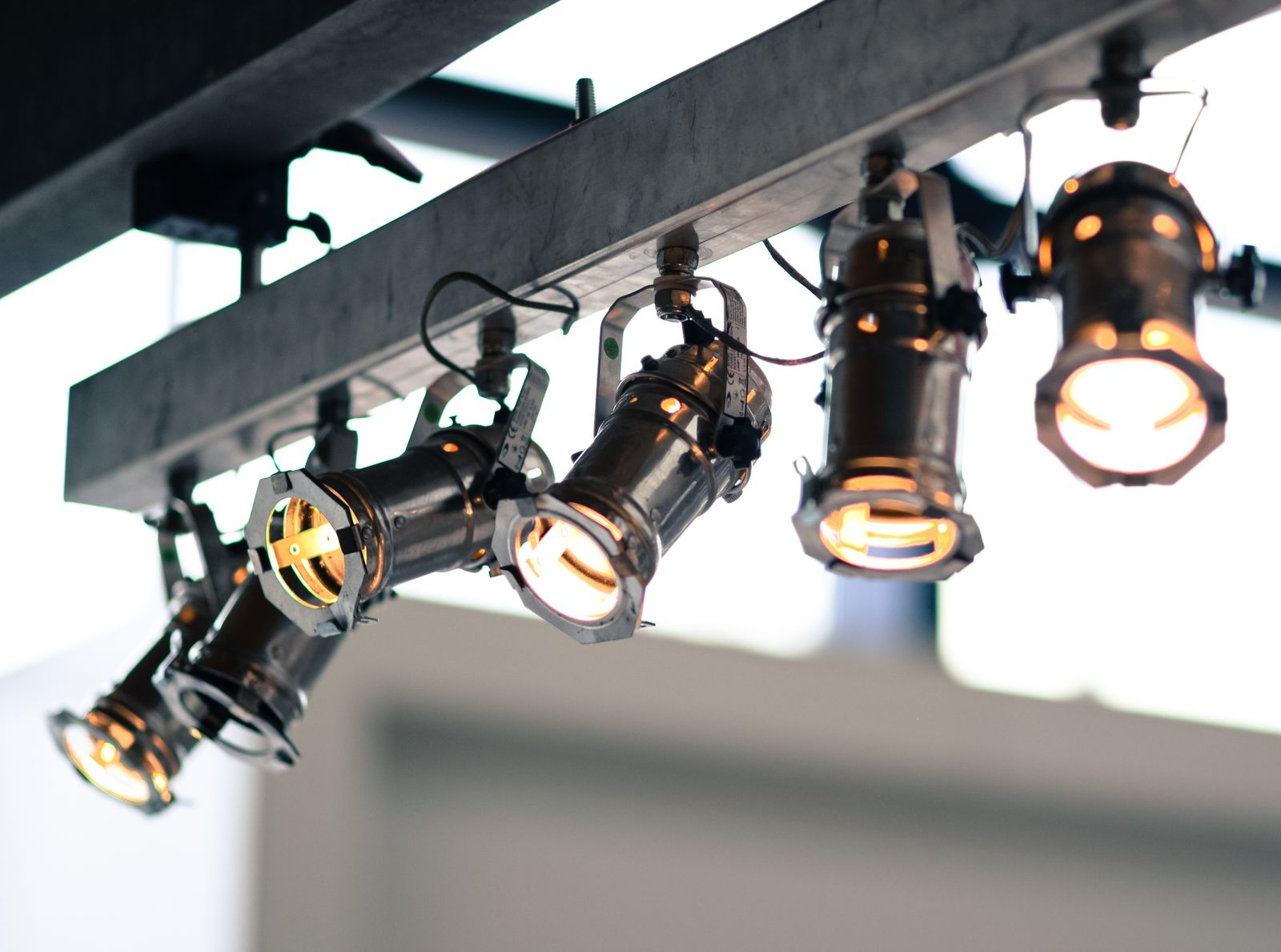
White track lighting is often chosen when the designer wants the ceiling to feel continuous rather than segmented. The rail and fixture remain available for precise illumination, but the hardware is less visually dominant.
Warm residential interiors
In rooms built around pale oak, limestone, linen, plaster and warm neutral colours, white can keep the ceiling light and calm. It is particularly useful when the room already has enough visual texture below the ceiling.
Bright galleries and exhibition spaces
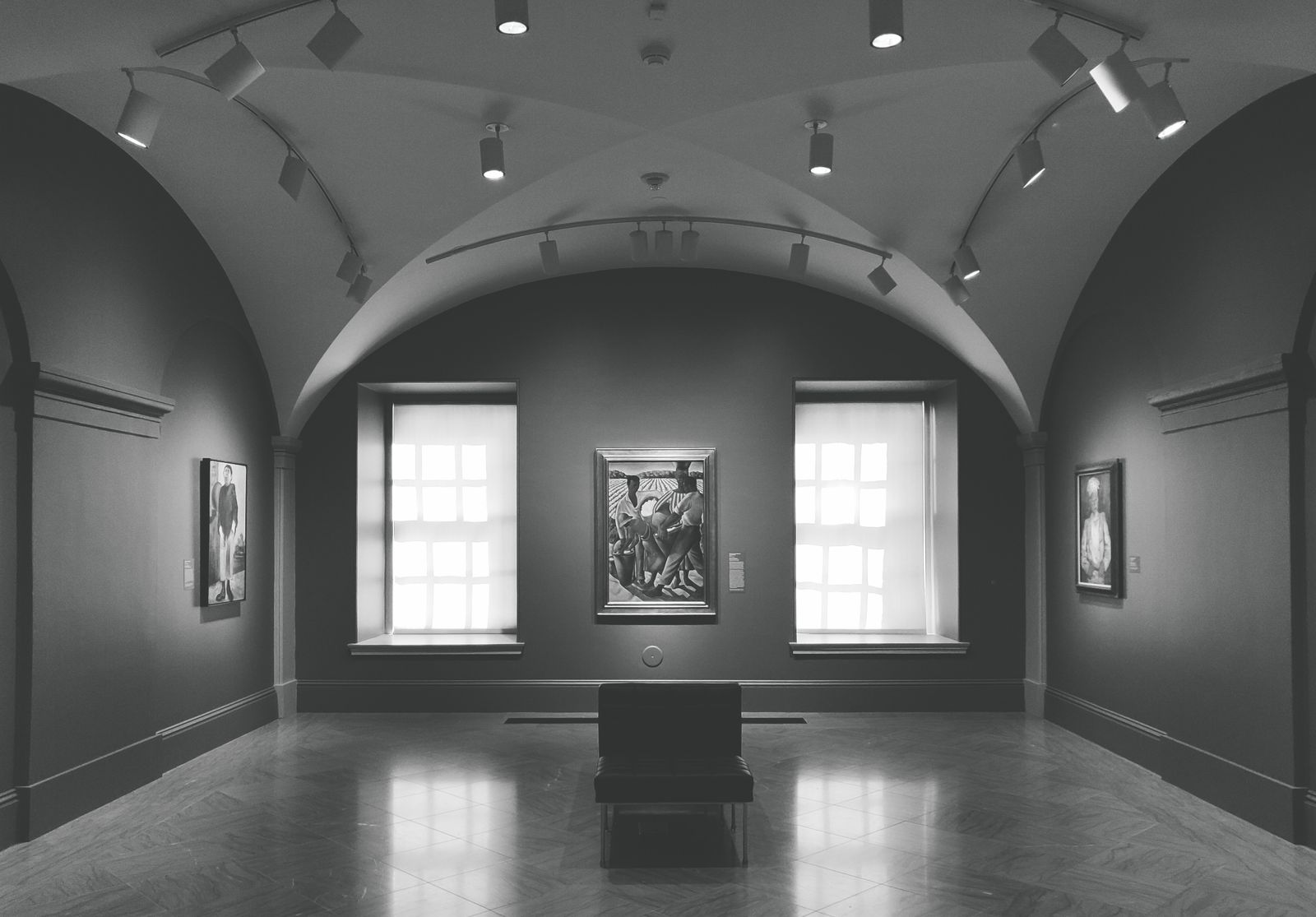
White can help keep attention on artwork rather than the technical installation. However, finish should never replace proper glare control, aiming and colour quality. A visually quiet fixture can still create an uncomfortable viewing experience if the optic is wrong.
3. When Black Track Lighting Works Best
Dark ceilings
Black on black is one of the easiest ways to reduce the visual weight of a track system. Instead of reading as a separate object, the rail and heads can merge into the ceiling plane.
Contemporary and industrial interiors
Black works naturally with exposed structure, dark metal, concrete, timber and strong geometric forms. The track becomes another architectural line rather than an isolated technical component.
Retail and commercial spaces
In retail, black can also make the lighting layout easier to read. The direction of the rails and heads can become part of the visual rhythm of the store, especially when black is repeated in shelving, signage or display frames.

4. Black Track on a White Ceiling: Make the Contrast Intentional
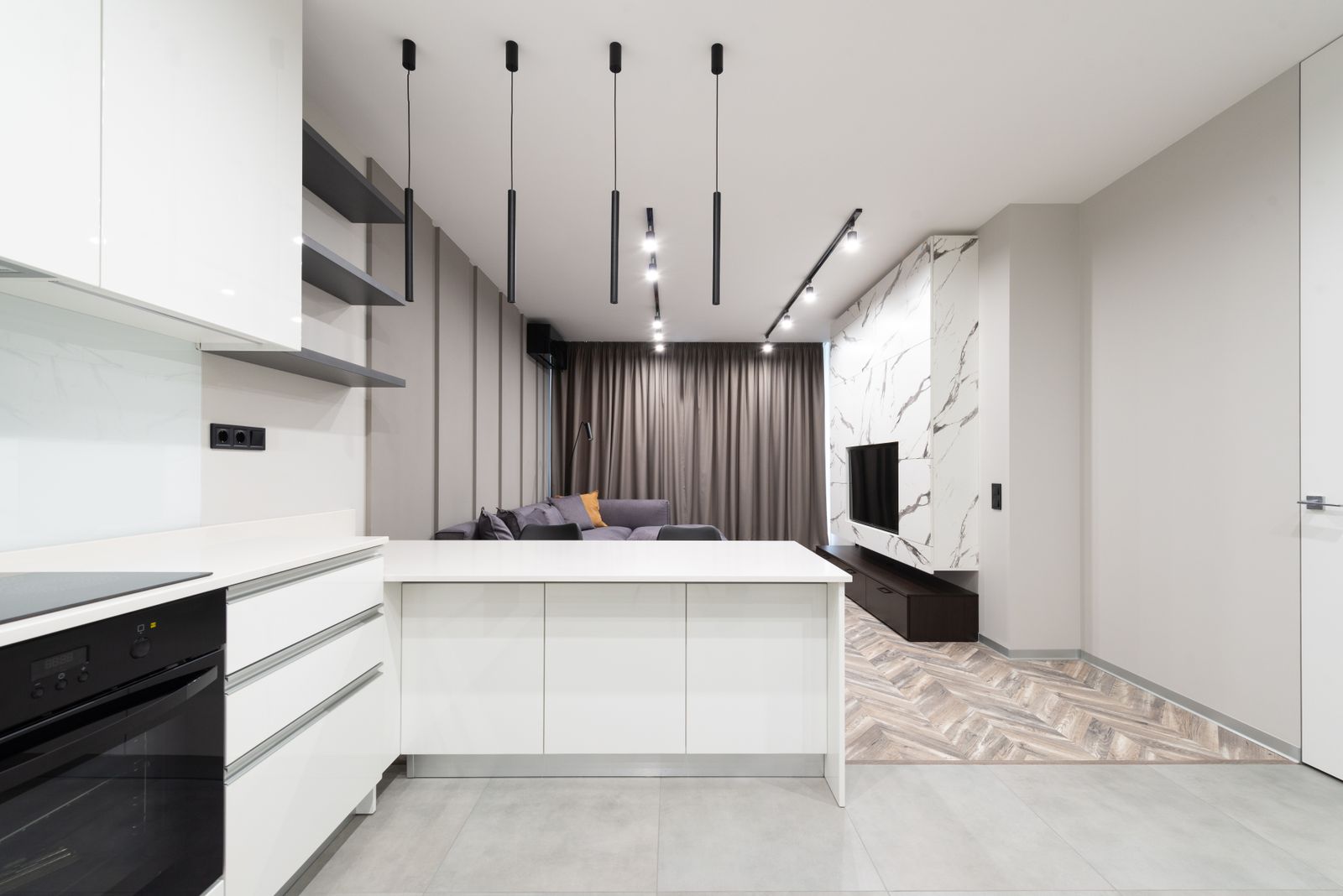
This combination is visually strong because the rail becomes immediately visible.
It works best when the same dark tone appears elsewhere in the room. Black door frames, shelving, furniture legs, window profiles, signage or metal details can make the track feel designed into the space.
The principle is simple: repeat the finish instead of using it once. When several elements share the same visual weight, the black track feels connected to the architecture.
5. White Track on a White Ceiling: Let the Light Do the Talking
White-on-white does not mean the lighting becomes invisible. It simply moves the contrast away from the hardware.
Instead of making the track the visual feature, the designer can create hierarchy through the beam itself: a narrow accent on artwork, a wider wash across a wall, or a controlled pool of light over a display table.
This approach is particularly effective when the architecture, furniture or artwork already provides enough visual interest.
6. Black vs White Is Only the Finish — Performance Comes First
For a real lighting project, finish should come after the lighting effect has been defined.
- Beam angle: narrow beams for accents, wider beams for general or display illumination.
- CRI and colour consistency: especially important for artwork, fashion, materials and merchandise.
- Glare control: snoots, honeycombs, optical accessories and fixture geometry can matter more than colour.
- Aiming range: useful when walls, displays or furniture layouts change.
- Output and mounting height: lumen requirements change with ceiling height and target surface.
- Dimming and controls: confirm compatibility with the project's control system.
- Track compatibility: make sure the head and rail are designed as a complete system.
For example, ENCORE's VEGA family combines multiple optical solutions with compact track heads, interchangeable accessories and flexible aiming. The current VEGA range includes Standard, Premium, Zoomable and Projector solutions, allowing the lighting effect to be selected before the finish is finalised. VEGA Track Light System
7. ENCORE VEGA: Black and White in the Same Design Language
This is where the black-vs-white decision becomes practical. ENCORE VEGA is available in black and white configurations, so the same core design language can be adapted to different ceilings and interior palettes.

VEGA is built around a slim, clean form with no visible screws, 360°+ rotation and 90° tilt. Depending on the model, it supports narrow to wide optics, interchangeable optical accessories, in-track drivers and optional tunable white control.
8. VEGA Product Options to Consider
If you are choosing a black or white track light for a project, these VEGA configurations cover three different lighting priorities.

VEGA-Premium — Compact, High-Output Accent Lighting
Best for: retail, commercial interiors, premium residential and display applications where a small fixture needs substantial output.
- 20W version with up to 125 lm/W efficacy
- 30°, 40° and 52° beam options on the 20W Premium model
- CRI 90+ / 95+ options depending on configuration
- Optional tunable white 2700–6500K
- 360°+ rotation and 90° tilt
- Black and white frame options
Explore ENCORE track lighting · View VEGA-Premium specifications

VEGA-Standard — Flexible Everyday Track Lighting
Best for: retail stores, commercial spaces and projects that need a broad selection of beam angles and power levels.
- 25W and 30W configurations, with other VEGA Standard sizes available
- 15°, 24°, 38° and 50° beam angles
- 2700K, 3000K, 3500K and 4000K static white
- Optional tunable white on selected configurations
- Track, surface and recessed mounting options on selected models
- Interchangeable honeycomb and oval optical accessories
Explore ENCORE track lighting · View VEGA-Standard specifications

VEGA-Zoomable — One Fixture, More Beam Control
Best for: galleries, changing displays, retail windows and projects where the target area may change after installation.
- 10W version adjustable from 10° to 60°
- 15W / 20W configurations with wider adjustable ranges
- CRI 90+ / CRI 95 options depending on configuration
- Optional tunable white on selected models
- 360°+ rotation and 90° tilt
- Interchangeable honeycomb, soft and oval optical accessories
Explore ENCORE track lighting · View VEGA-Zoomable specifications
9. Which Finish Fits Different Rooms?
Living Room
Look at the window frames, furniture legs and existing metalwork. White can keep a bright ceiling calm. Black can introduce definition when the room already contains darker details.
Kitchen
Match the lighting conversation to cabinet handles, appliances and window frames. Black can echo dark hardware; white can disappear into a white ceiling above a light kitchen.
Bedroom
If the room is designed around visual calm, white can reduce the amount of technical hardware seen from the bed. A black fixture can work when the palette is intentionally monochrome or architectural.
Retail
Black is often useful when the ceiling, shelving and display system use dark materials. White can work well when the merchandise and bright ceiling should remain visually dominant.
Gallery or Museum
Choose the finish according to the ceiling first, then specify the optical performance. CRI, colour consistency, glare control, beam precision and aiming are more important to the artwork than whether the housing is black or white.
10. A 30-Second Black vs White Decision
- Look at the ceiling. Light, dark, exposed or architectural?
- Look at the metalwork. Mostly black, mostly white or mixed?
- Decide the visual role. Should the track disappear or become part of the architecture?
- Check the room. Is it residential, retail, hospitality, gallery or museum?
- Choose the lighting effect. Beam angle, CRI, output, glare and aiming come before finish.
- Then choose black or white. Keep the same lighting language wherever possible.
Black vs White Track Lighting: The Finish Should Support the Architecture
Black track lighting can become a strong architectural line or disappear into a dark ceiling. White track lighting can blend into a bright ceiling and leave more visual attention for the room, artwork or merchandise.
There is no universal “best” finish. The better design question is: where should the eye notice the lighting system, and where should it notice the light itself?
ENCORE's VEGA family gives project designers a way to keep a consistent fixture language while changing the finish, optic, output and control strategy around the space.
Planning a lighting project? Send us the ceiling colour, mounting height, room photos and the surfaces you want to illuminate. ENCORE can help you compare VEGA finishes, beam angles and configurations for the project.